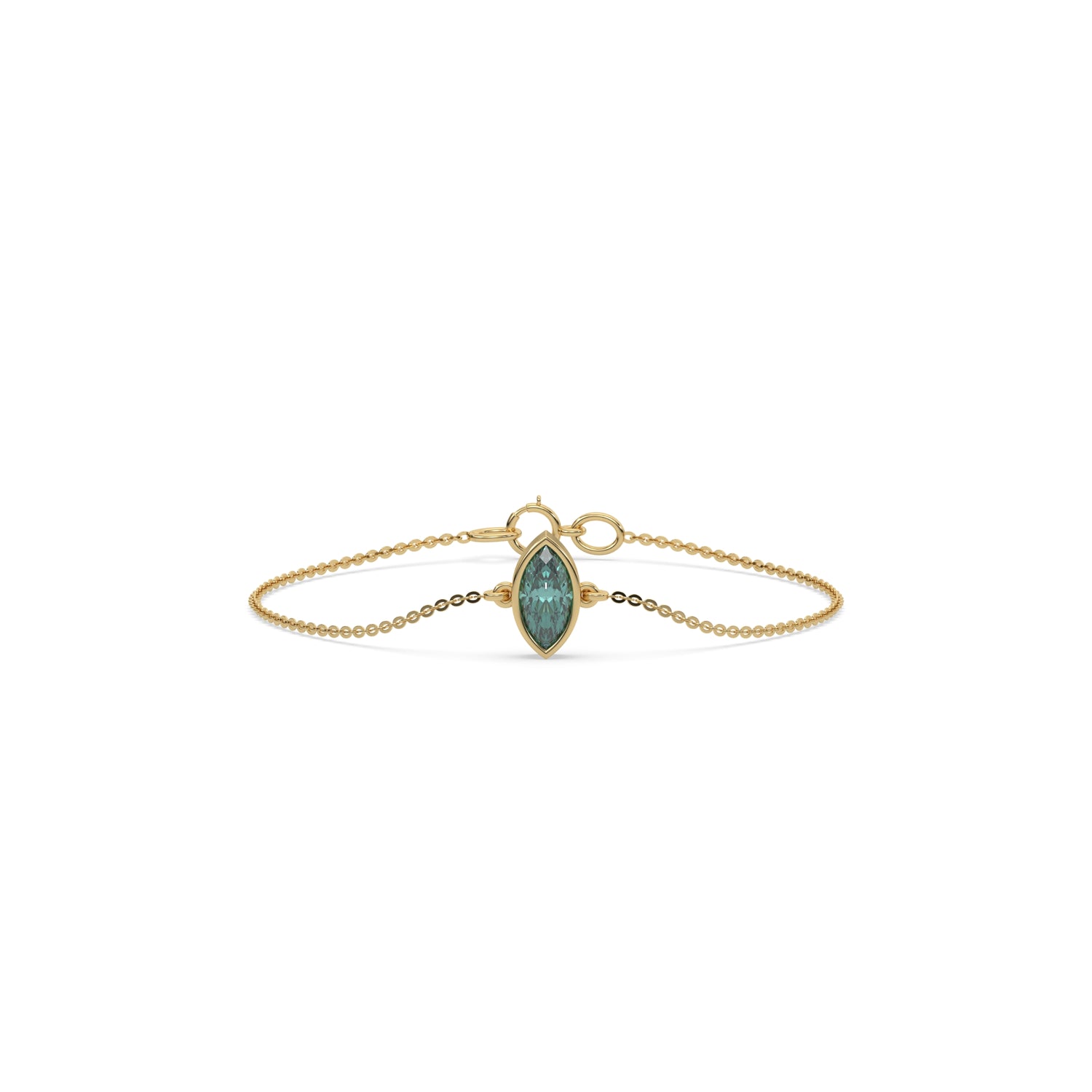
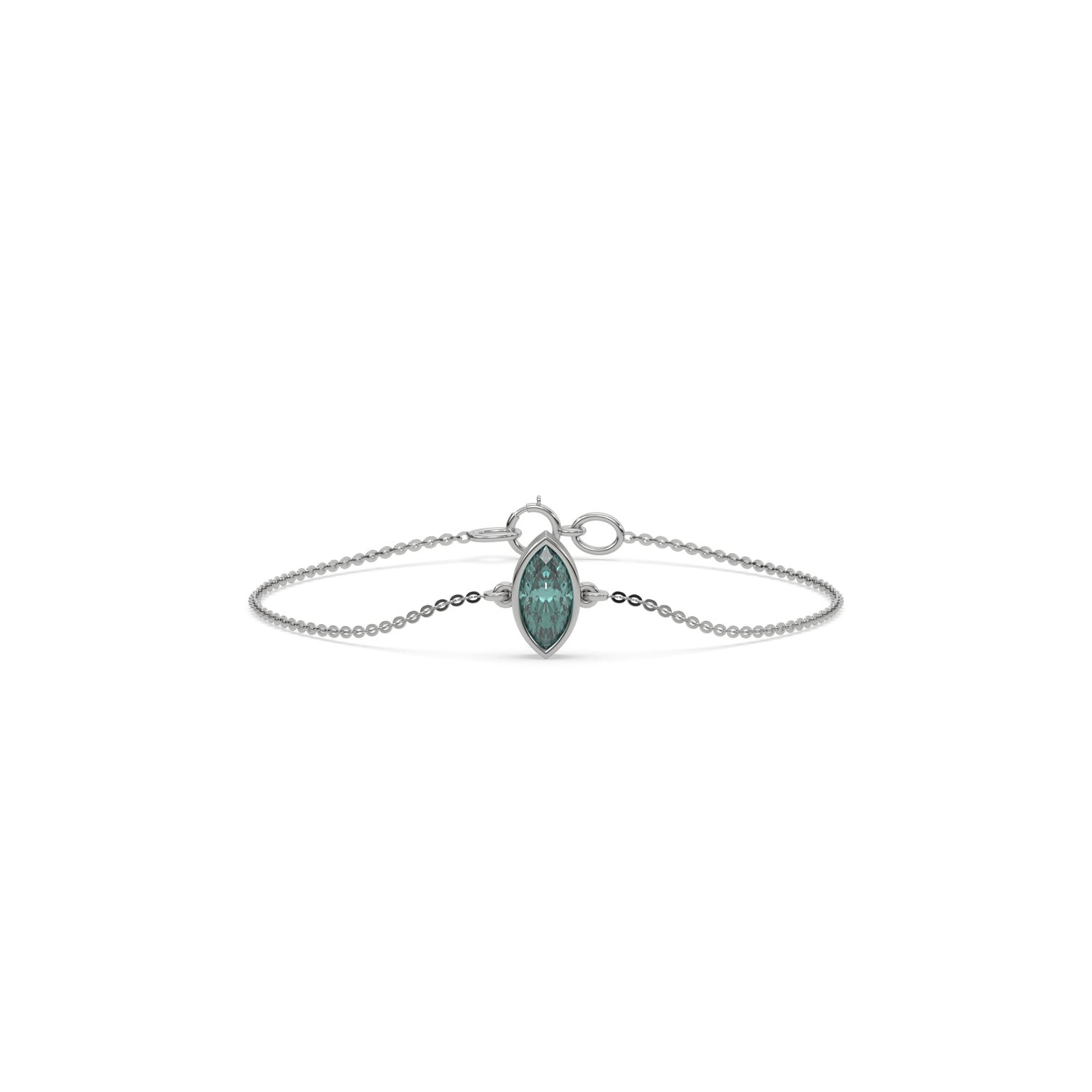
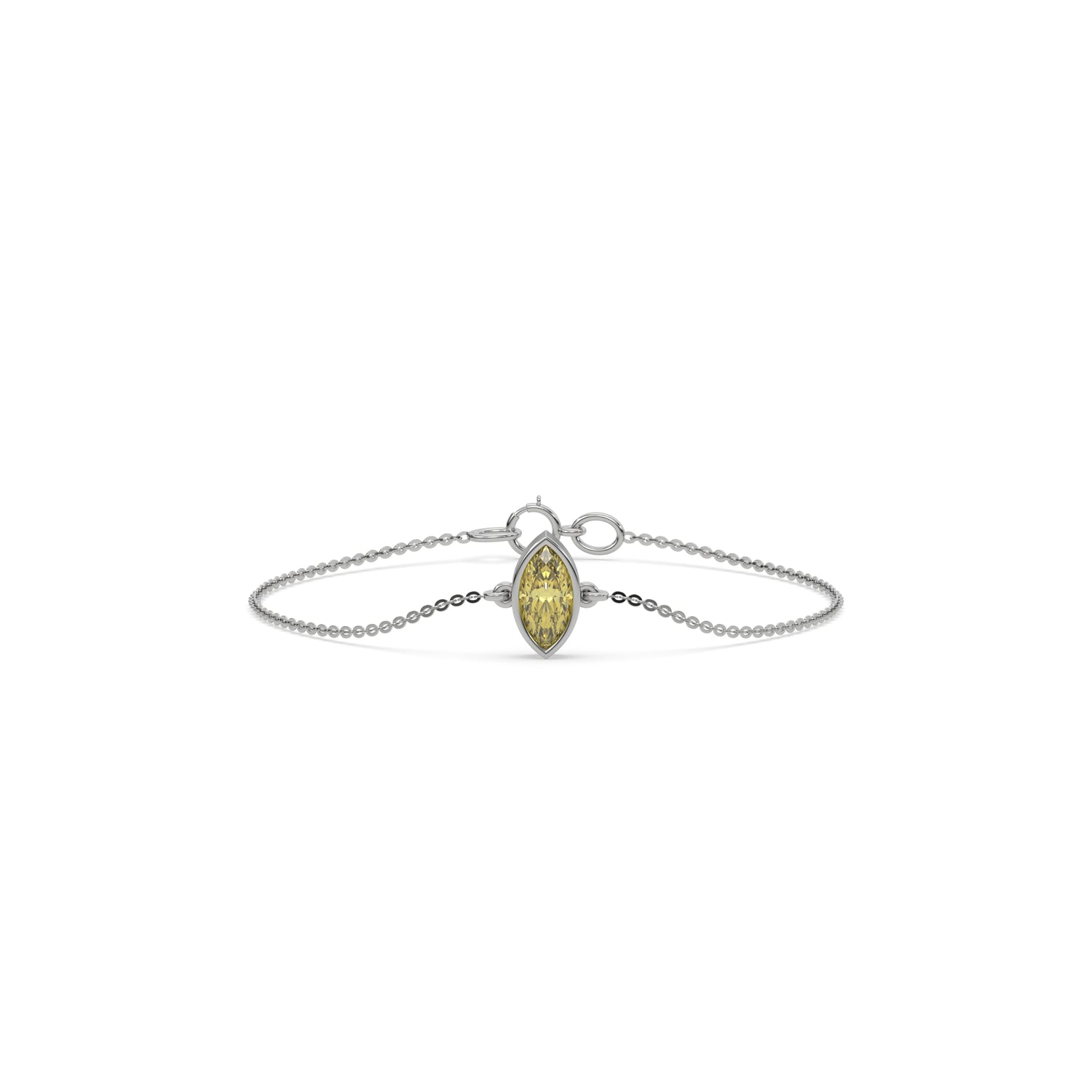
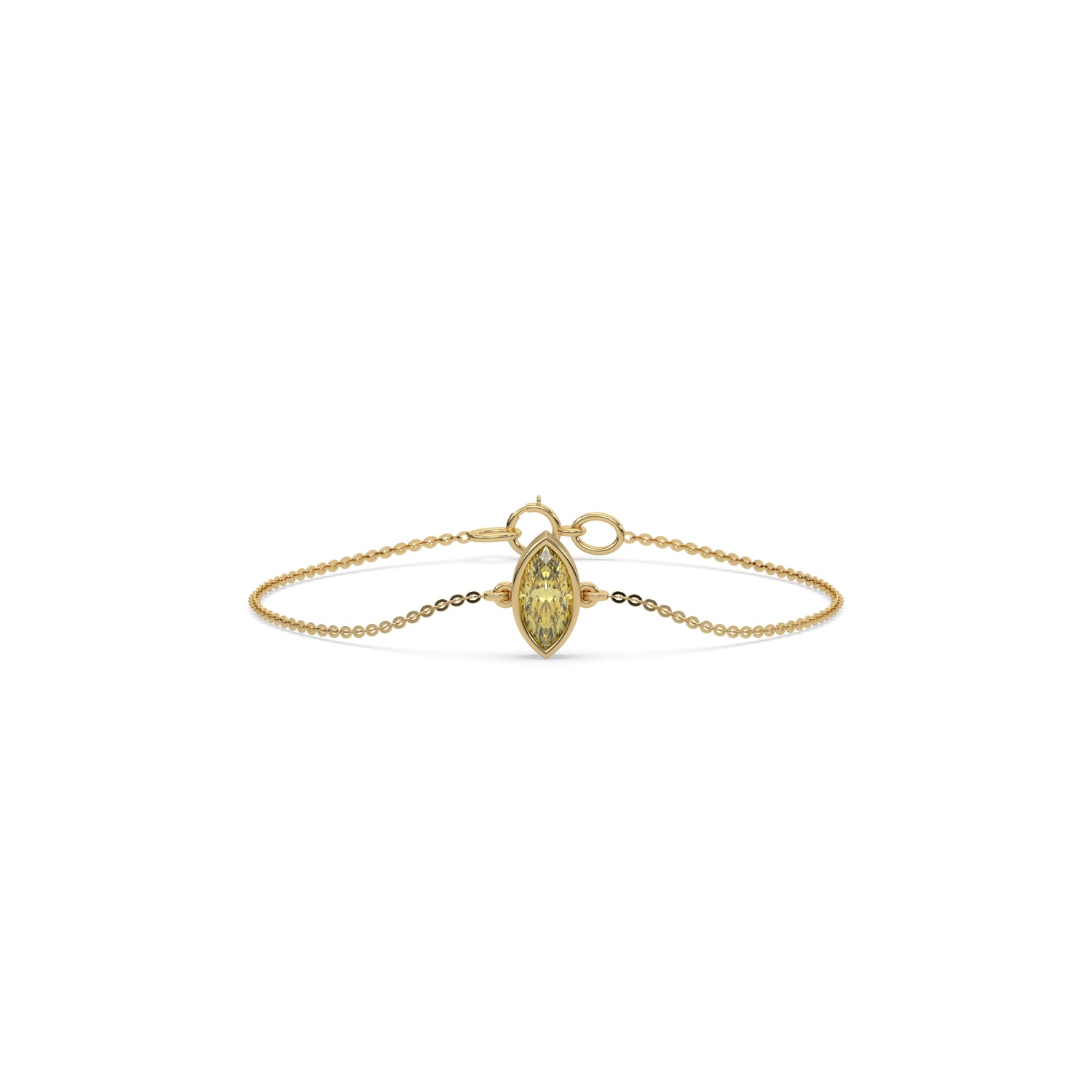
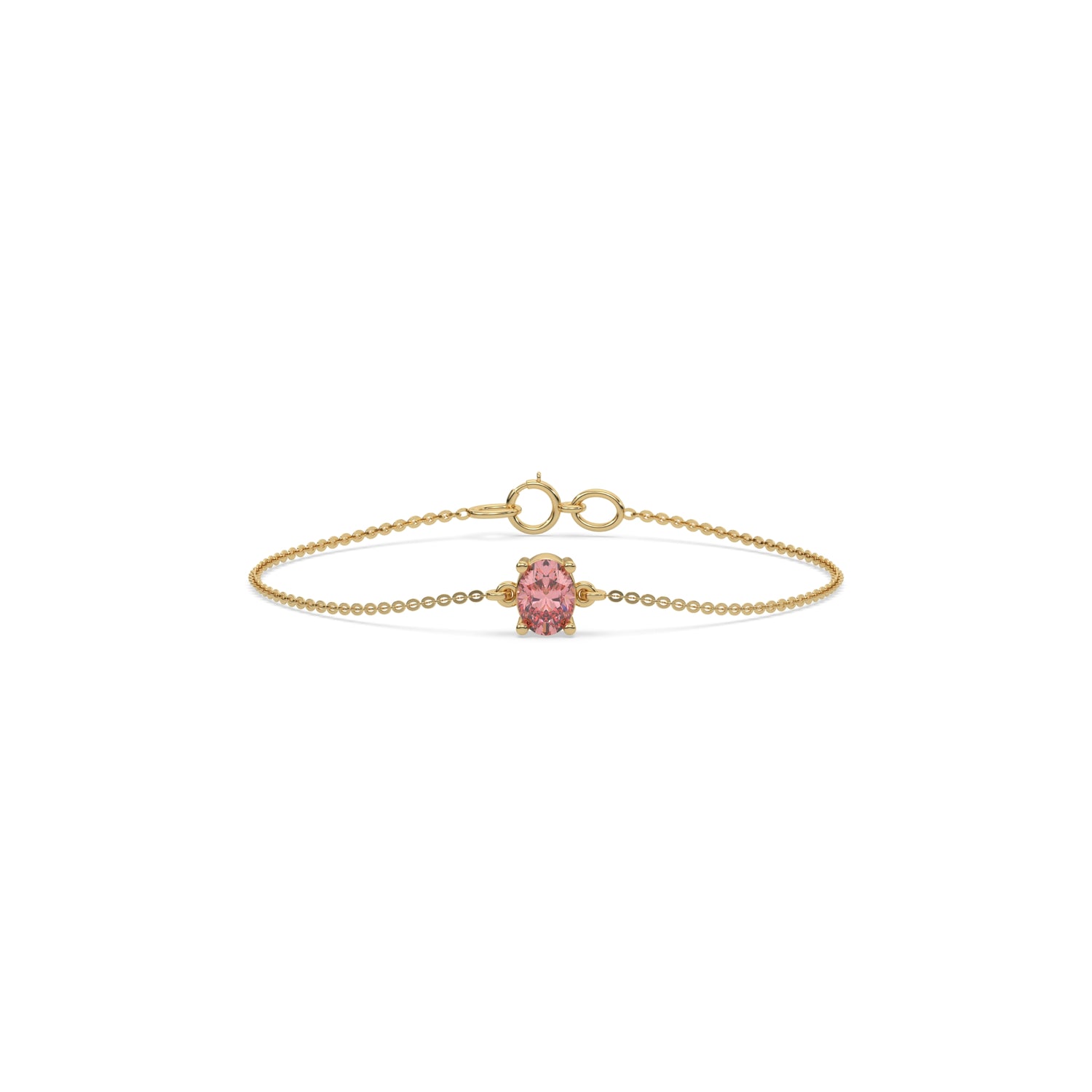
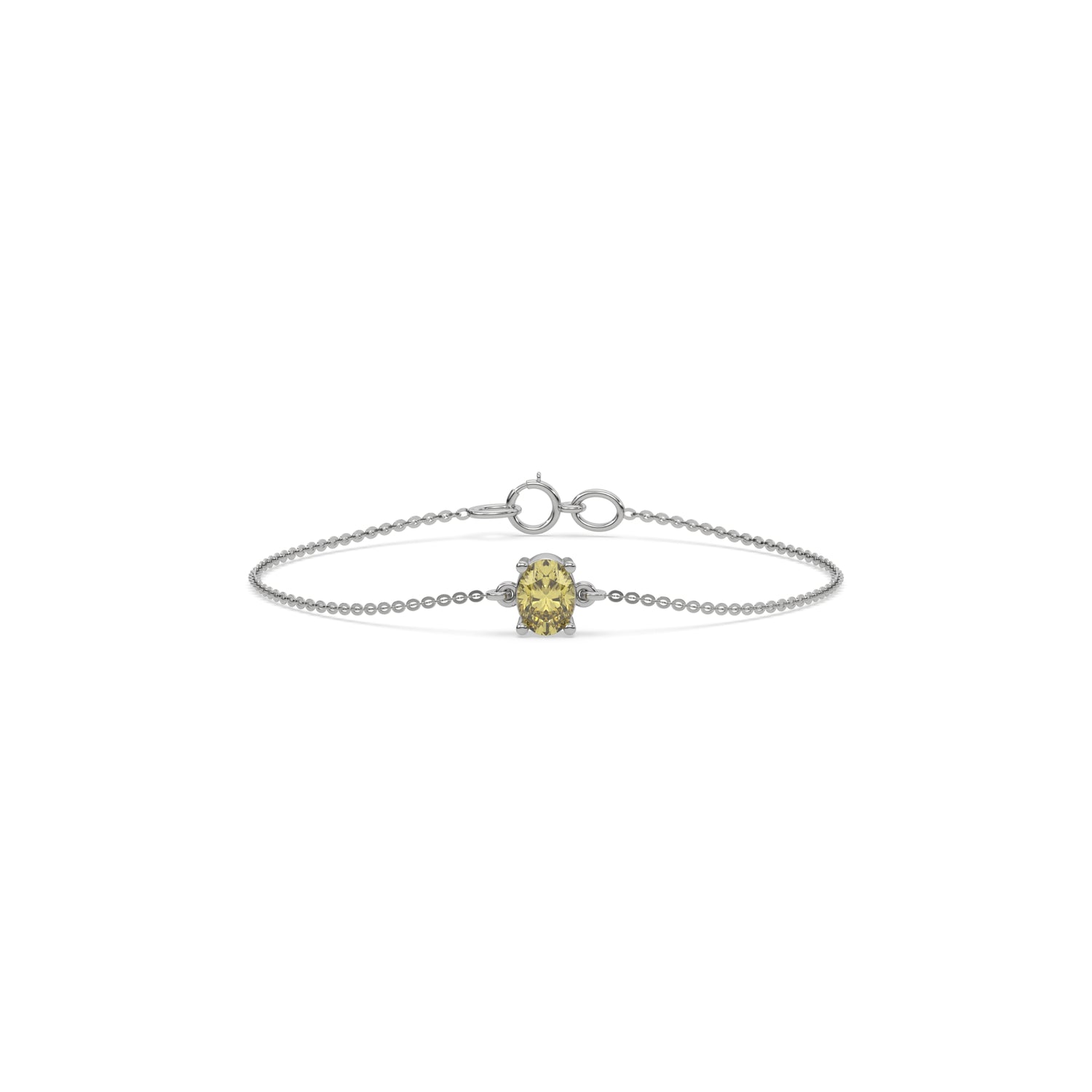
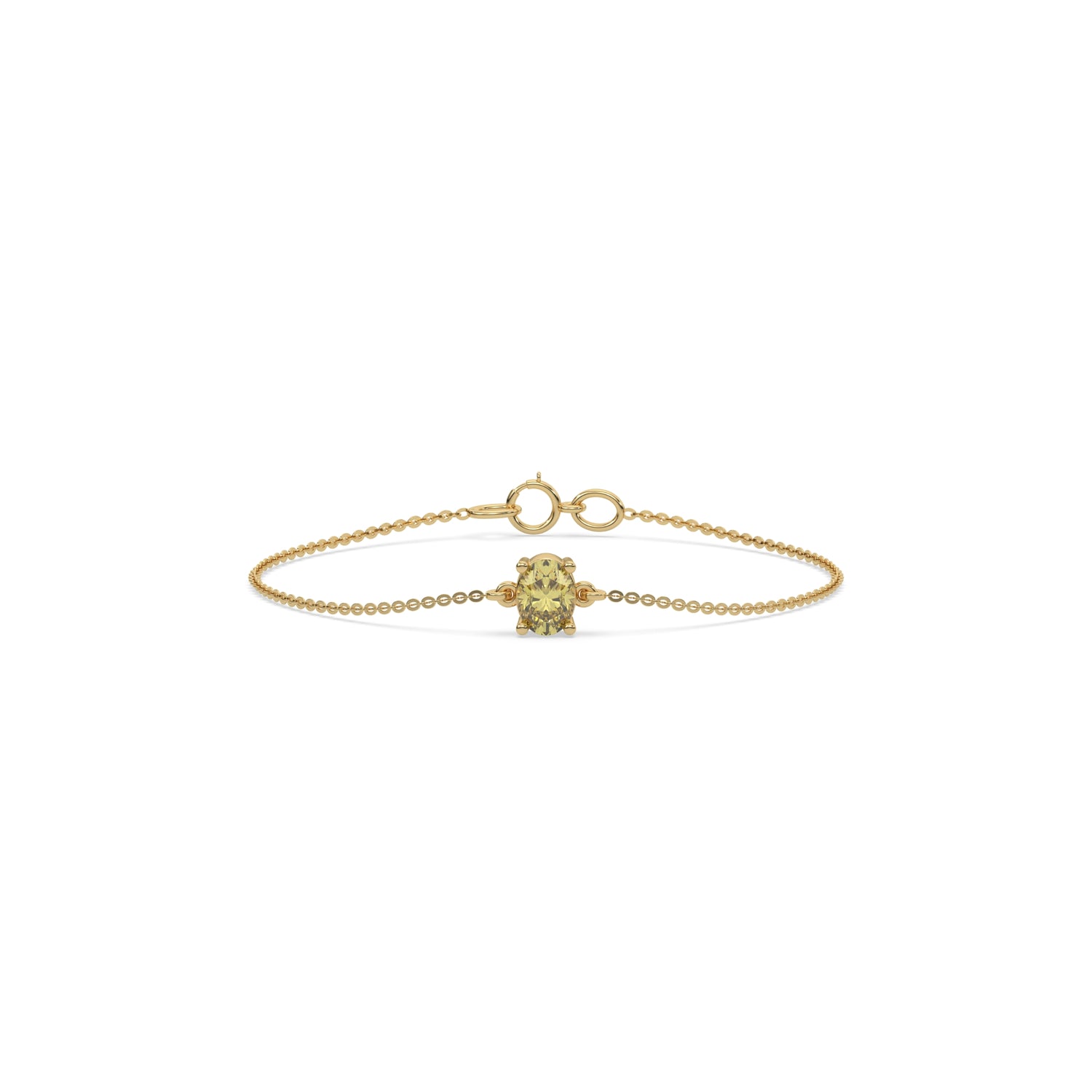
Colored Diamond Bracelets for Women
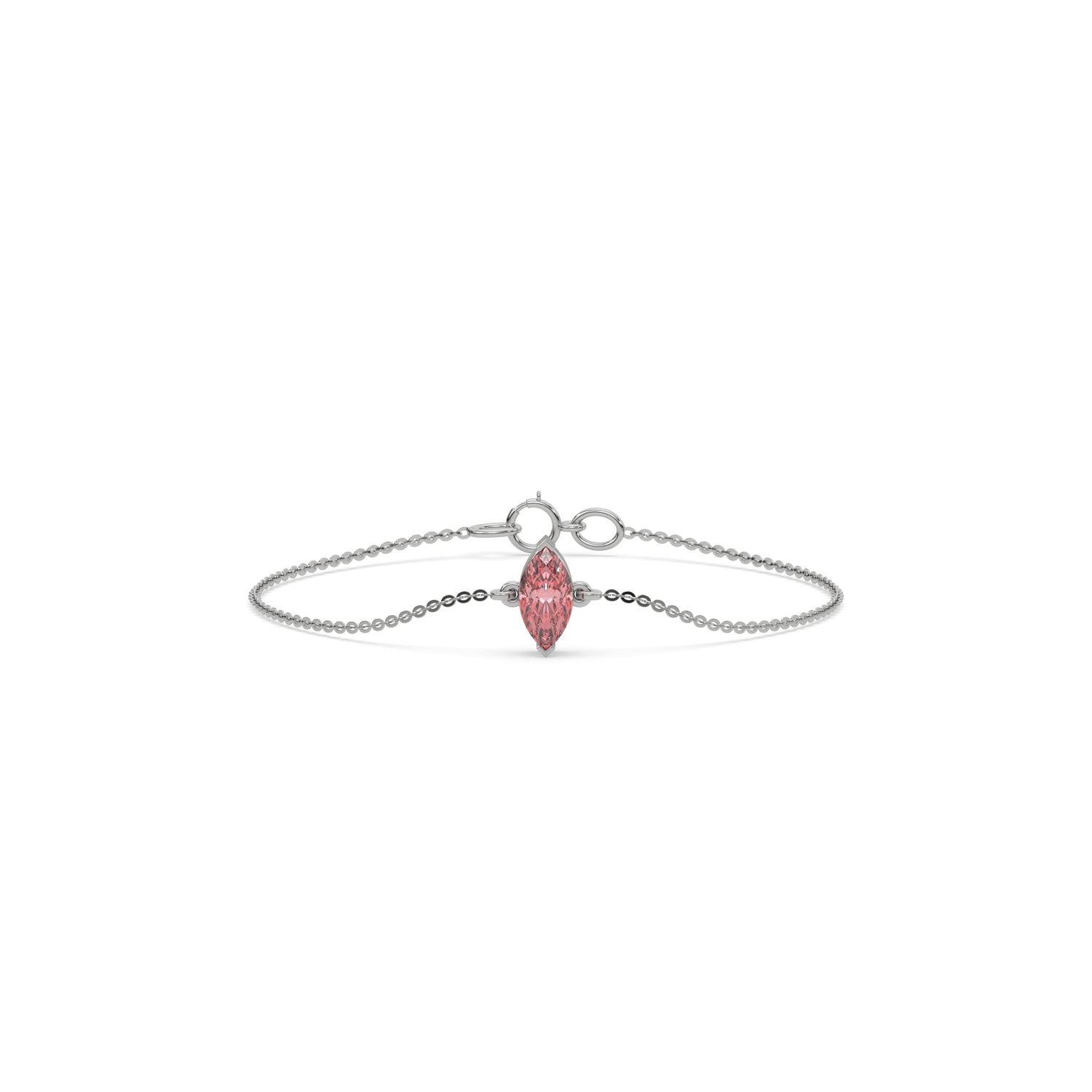
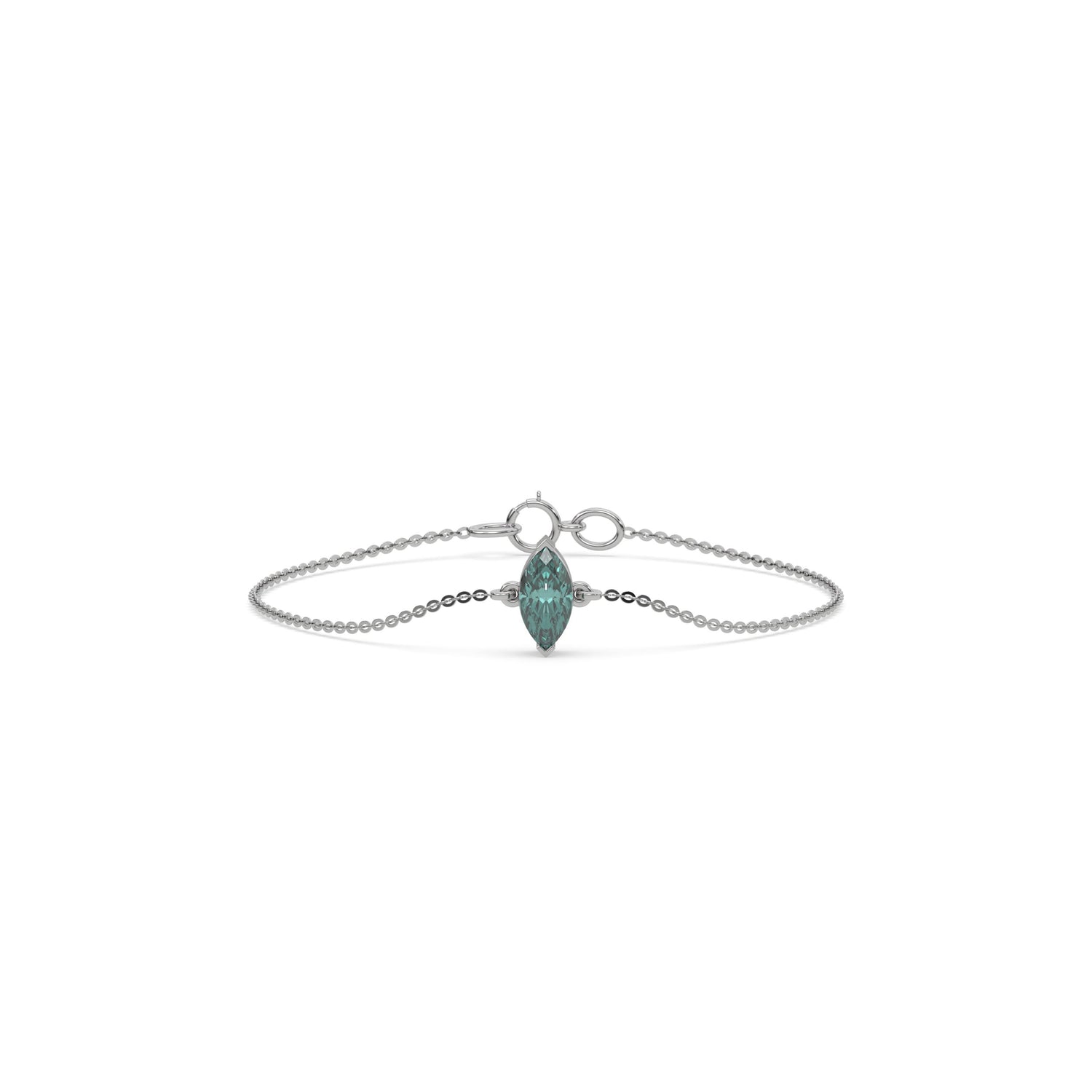
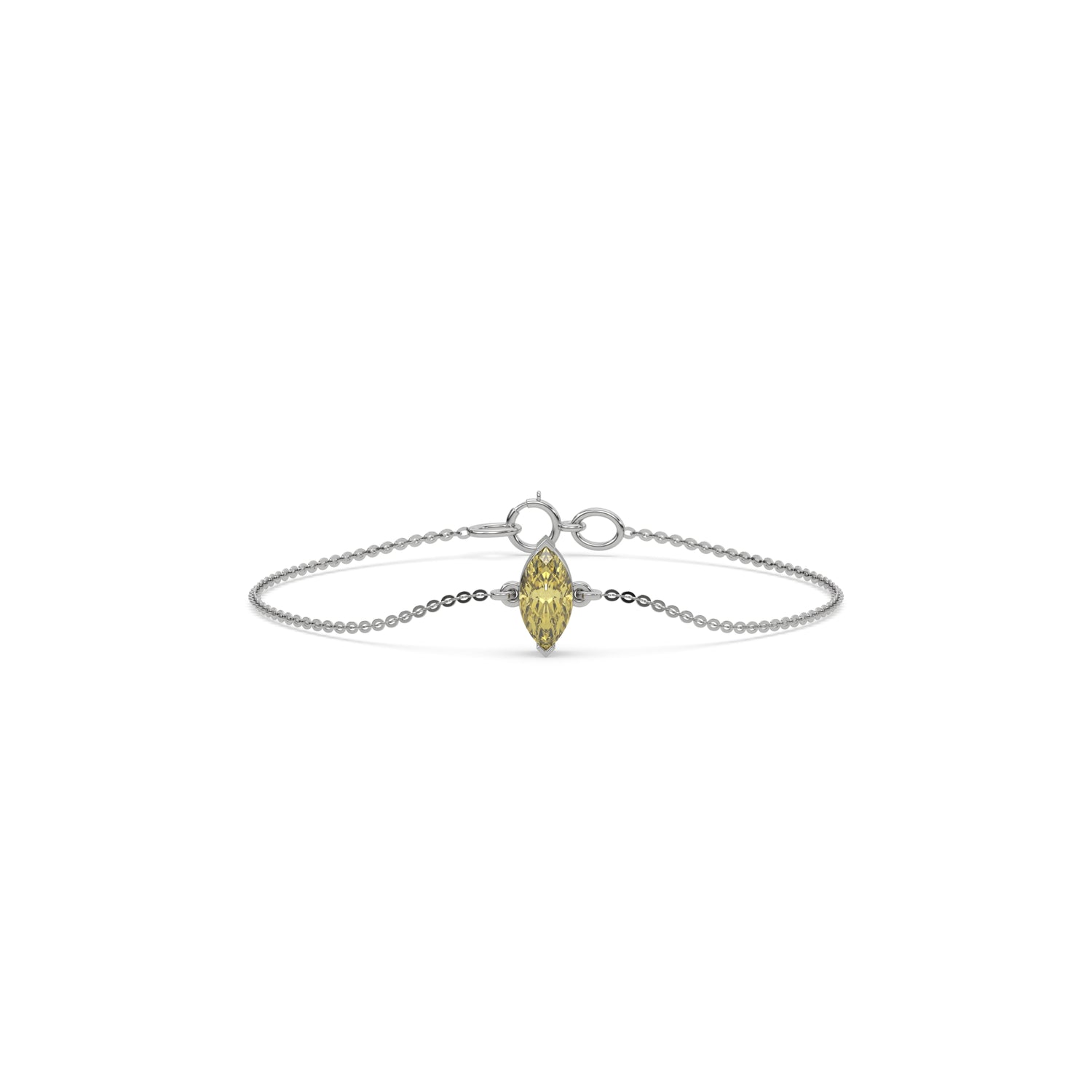
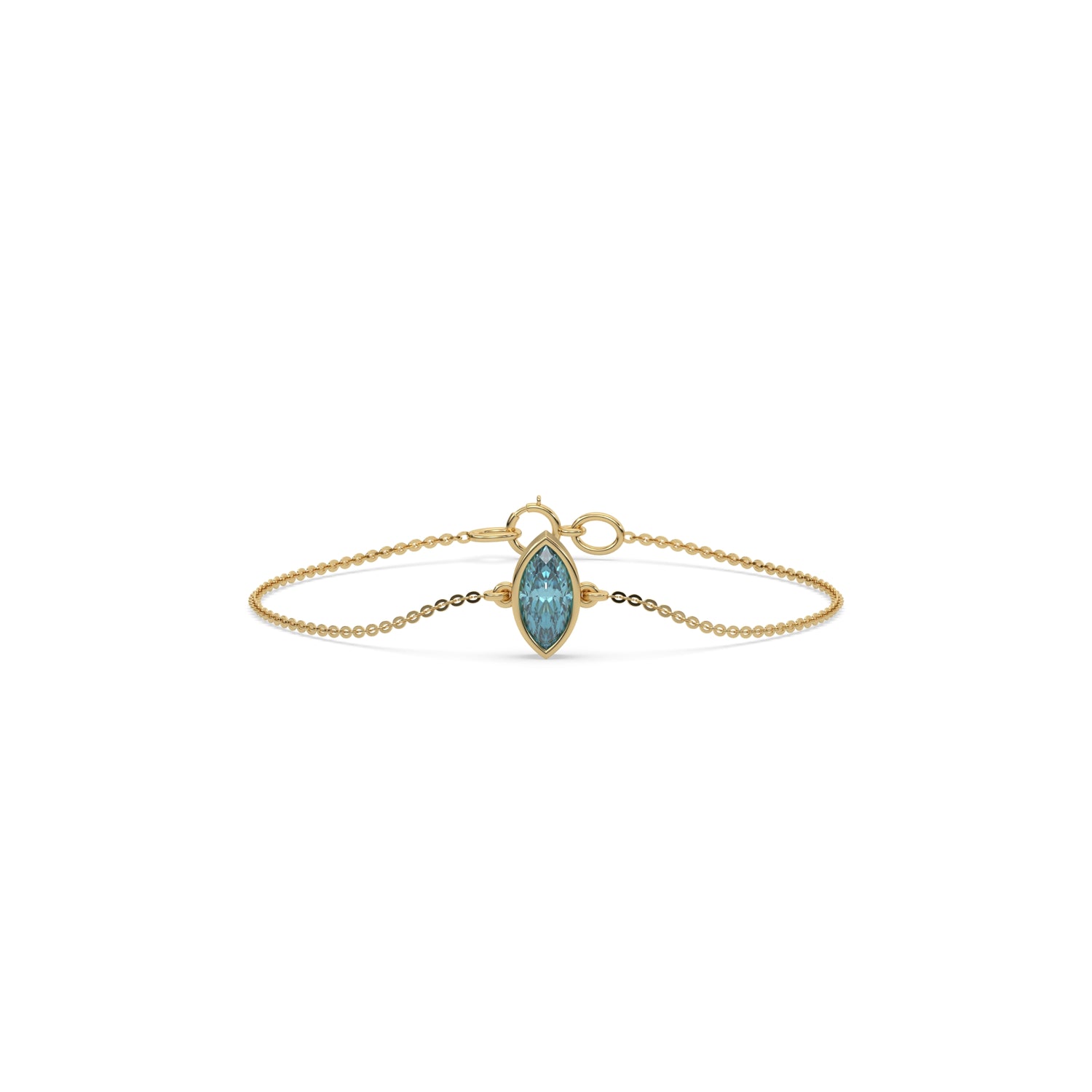
One colored diamond on a fine chain does more than a whole line of white stones could. Our colored bracelets each carry a single lab-grown diamond in pink, yellow, blue or green, cut as a round, oval, marquise, pear or emerald cut, and held in a bezel or in prongs. Which gold you set it in changes the color more than most people expect, so this page starts there.
Grown First, Colored Second
Every stone in this collection is a lab-grown diamond made by the CVD method, and every one gets its color from a treatment after growth. The diamond is grown colorless or near-colorless, then treated so that its crystal absorbs light in a way that reads as pink, yellow, blue or green. The result is still diamond in hardness and sparkle; only the color has been added. We disclose both facts on each listing, and a few older product names that leave out the word "lab" refer to lab-grown, treated stones too.
This approach is what makes a full range possible. Naturally colored diamonds in these shades are scarce and priced accordingly, so matching four colors across five shapes would be out of reach in mined stones. Grown and treated stones let you choose the exact combination you want at a sensible price.
The standard size is 1 carat. Stones up to 3 carats, and larger, can be ordered on request, and lab-grown diamonds of 1 carat and up come with an IGI report. Any piece over $800 also includes a GSI jewelry certificate.
How Each Color Meets the Metal
A colored diamond picks up some of the tone of the metal around it, which means the same stone can look noticeably different in different golds. Every bracelet is made in 10K, 14K or 18K yellow, white or rose gold, and many designs also come in 925 sterling silver, though not all of them.
Pink is the most sensitive to metal. In rose gold it reads warm and blush-toned, with the metal echoing the stone so the two blend together. In white gold or silver the pink looks cooler and clearer, closer to candy than to rose. Yellow gold tends to push it toward peach. See every shape and setting in our pink diamond bracelets.
Yellow grows richer in yellow gold, because the warm metal reflects into the stone and deepens it. White gold does the reverse: it frames the yellow with a cool edge so the color looks crisp and lemony rather than golden. Rose gold sits in between. The whole range is in our yellow diamond bracelets.
Blue reads cleanest in white gold or silver, where nothing warm interferes and the stone looks like ice or deep water depending on the light. In yellow gold blue gives a striking contrast, closer to the look of vintage sapphire jewelry. Our blue diamond bracelets show it in every metal option.
Green is the most adaptable. White gold keeps it fresh and minty; yellow gold makes it look deeper and more botanical; rose gold gives an unusual soft contrast. If you can't decide on a metal, green is the safest color to start with. All of it sits in our green diamond bracelets.
A Rim of Metal or Open Prongs
The setting changes color too. A bezel wraps the stone in a thin wall of gold, and that wall reflects its own tone into the diamond from every side. In yellow gold, a bezel warms any color; in white gold it cools it. The color also looks a little deeper, because less light enters from the sides.
Prongs hold the stone at four points and leave the sides open, so more light passes through and the color looks brighter and lighter. If you want the clearest, most saturated version of the color, a prong setting in white gold shows it most honestly. If you want the color softened and framed, a bezel in a warm gold does that. Either way, the full set of shapes and settings across white and colored stones is gathered in our solitaire bracelets.
Shape and the Depth of Color
Shape affects how evenly color shows. A round or oval spreads light evenly, so the color looks uniform across the stone. A marquise or pear concentrates color toward its points, which can make the tips look a shade deeper than the center. An emerald cut, with its long flat step facets, shows color in calm bands, a cooler and more architectural look than the brilliant shapes. If you want color you can see clearly from a distance, ovals and pears tend to show the most face-up area for a 1 carat stone.
Color Beside White
A colored solitaire is easiest to wear as the single point of color in an otherwise white stack. Pair it with a white diamond tennis line, a slim bangle or a plain chain, and let the color carry the accent. To carry the same color up to the neck, our colored diamond necklaces use the same four shades, so a pink bracelet and a pink pendant can be ordered in the same metal for a set. Our colored diamond earrings finish the look near the face. Keep the colored pieces to one shade at a time, or two at most, so each one still reads as an accent rather than a rainbow. A single blue bracelet beside a white tennis line looks deliberate; four colors on one wrist tends to look busy.
Color Made to Your Request
Beyond the listed solitaires, we can make colored designs to order: a larger stone up to 3 carats or above, a full tennis line in one color, a tennis line that alternates color with white diamonds, or a cluster in a single shade. Tell our custom design team what you have in mind for a quote. Shipping is free within the US, and we ship internationally.