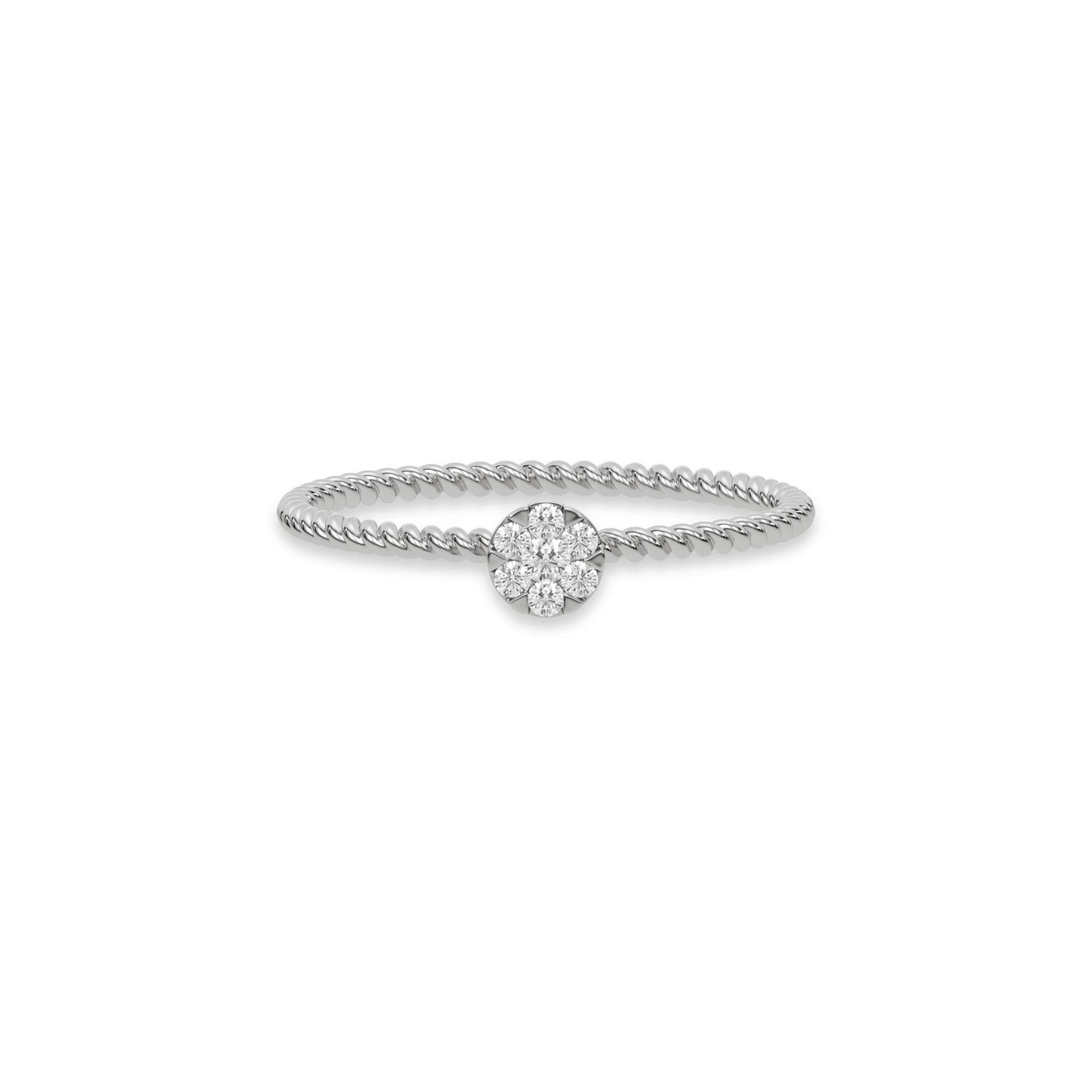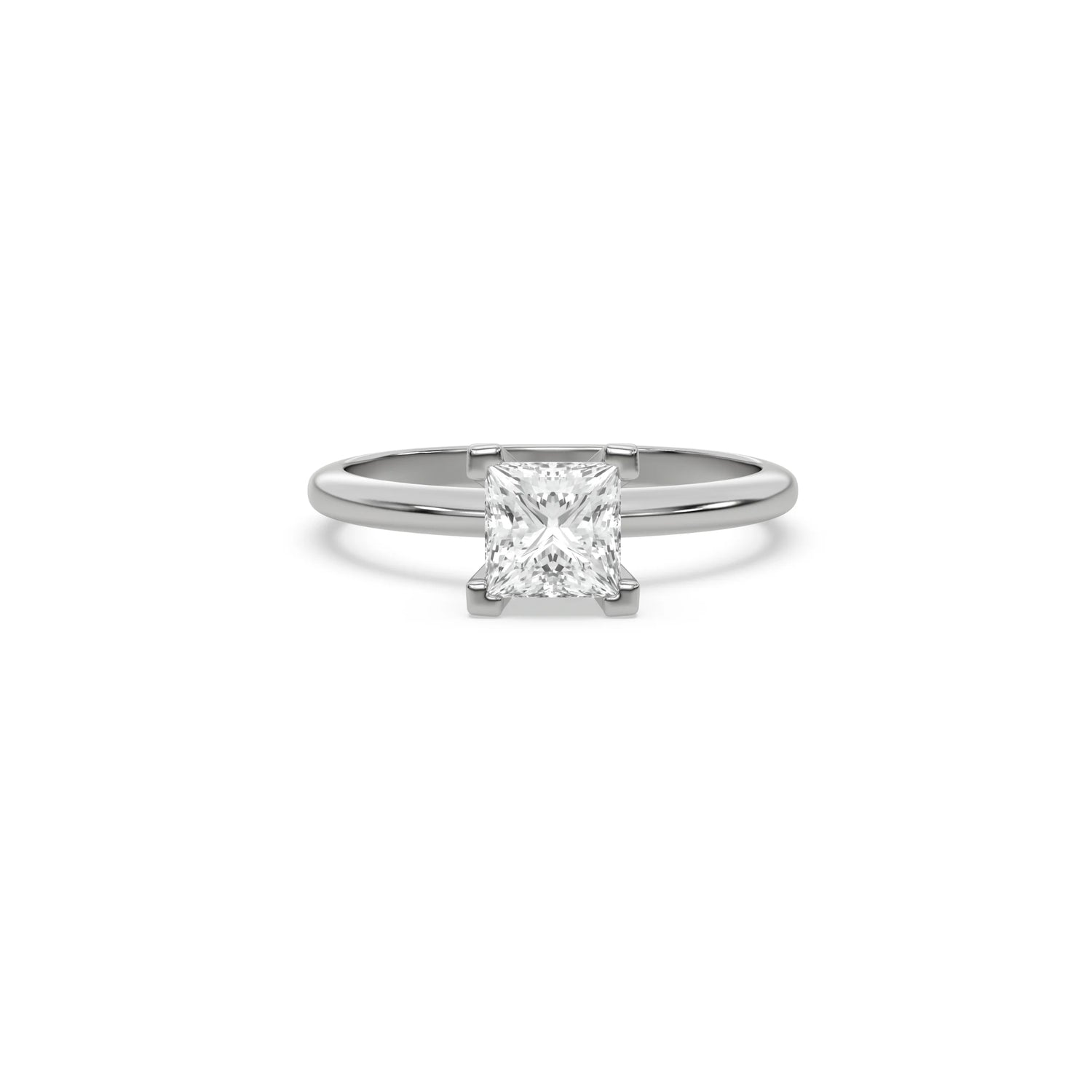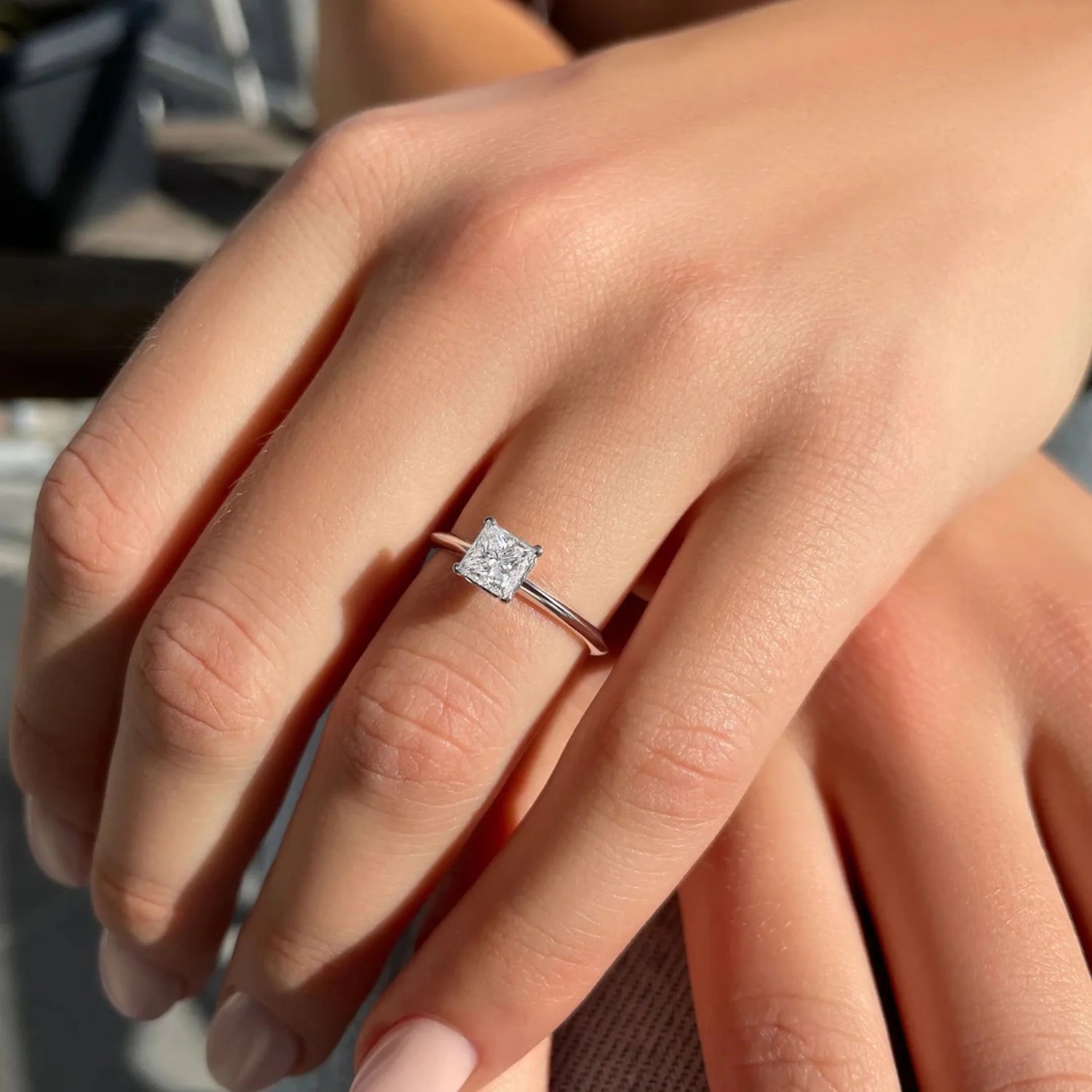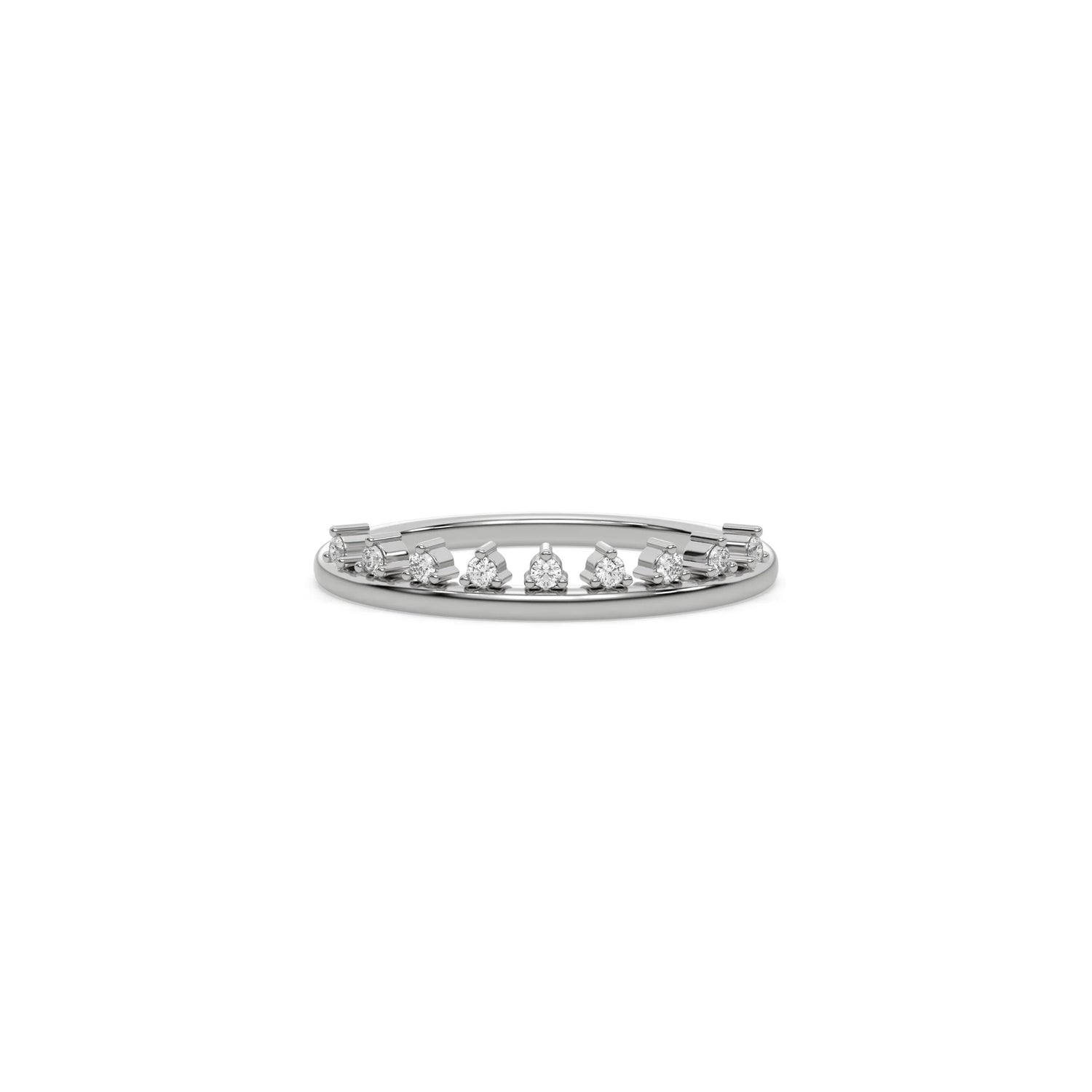
Natural Diamond Rings for Women
Every ring in this collection is set with mined diamonds. You will find engagement rings, wedding bands, eternity rings and everyday pieces here, in round, oval, cushion and other cuts. Any single natural diamond of 0.50 carat or above comes with an IGI or GIA certificate, so you can see the stone's grades before you buy.
What Makes a Diamond Natural
A natural diamond is carbon that crystallized deep inside the earth, in most cases more than a billion years ago, and was later carried toward the surface by volcanic activity. It is mined, then cut and polished. Because each crystal grew under slightly different conditions, each stone has its own pattern of tiny internal marks, which gemologists call inclusions.
That origin is the only difference between a natural diamond and a lab-grown one. Our complete guide to natural diamonds goes into how they form and how they reach a jeweler.
Certification: What You Get
Any single natural diamond of 0.50 carat or above in our rings is certified by IGI or GIA. Both are independent gem laboratories, and neither sells diamonds.
A certificate, also called a grading report, records what the lab measured:
- Carat weight, to two decimal places
- Color grade
- Clarity grade
- Measurements of the stone in millimeters
- Cut grade, where the lab assigns one for that shape
The report lets you compare two rings on facts instead of photos. Diamonds under 0.50 carat, including the small accent stones on a band or halo, do not come with a certificate or other documentation. If you have a question about a particular stone, contact us and we typically reply within 24 hours.
Shop Natural Diamond Rings by Type
Engagement rings. One main diamond, with or without accents. This is where certification matters most, because the center stone carries most of the price. See natural diamond engagement rings, and read the natural diamond engagement rings buying guide.
Wedding bands. A row of smaller diamonds across the top of the band or all the way around. See natural diamond wedding bands.
Eternity rings. Diamonds set continuously around the band. See natural diamond eternity rings.
Fashion rings. Clusters, open rings and other designs that are not tied to a wedding. See natural diamond fashion rings.
Anniversary rings. Bands chosen to mark a milestone. See anniversary rings for women.
Shop by Diamond Shape
Shape is a matter of taste, but each one behaves a little differently.
- Round: the brightest cut, and the one with the most established grading standards.
- Oval: covers more of the finger than a round of equal weight.
- Cushion: a square or rectangle with rounded corners.
- Princess: a square with pointed corners, which need a prong or bezel over each tip.
- Emerald: long, open facets that show clarity plainly, so a higher clarity grade is worth paying for.
- Radiant: the outline of an emerald cut with livelier faceting.
- Pear and marquise: elongated, with points that should sit under a protective prong.
- Heart and asscher: less common choices for buyers who want something distinctive.
Each shape collection shows our rings in that cut, and most shapes are available with natural diamonds. The product page states the diamond type.
Reading the Grades
Four grades describe any diamond. Knowing what each one does helps you decide where to spend.
Cut is how well the facets are angled and proportioned. It has the biggest effect on how bright the stone looks, so it is usually the last place to compromise.
Color is graded from D, which is colorless, down the alphabet toward Z, which shows visible yellow or brown. The differences between neighboring grades are small and hard to see once a stone is set.
Clarity runs from Flawless to Included. Many stones in the middle of the scale have marks that cannot be seen without magnification.
Carat is weight, not size. One carat is 0.2 grams. Two diamonds of the same weight can look different in size depending on their shape and how deep they are cut.
A common approach is to hold out for a good cut, then choose the color and clarity grades at which you can no longer see a difference with your own eyes.
Natural or Lab-Grown?
Both are real diamonds with the same hardness and the same appearance. The difference is where they come from and what they cost.
A natural diamond is mined from a limited supply. A lab-grown diamond is produced in weeks, and it costs less per carat. Some buyers choose natural for its origin. Others choose lab-grown to get a larger stone for the same budget. Neither is the better stone, and a jeweler cannot tell them apart by eye.
If you want to compare, see our lab-grown diamond rings for women and the lab vs natural diamond guide.
Metal and Setting
Our rings are made in solid gold. The color you choose changes how the diamond reads: yellow and rose gold add warmth around the stone, and white gold keeps the whole ring cool-toned. The engagement ring metals guide compares the options.
The setting decides how exposed the diamond is. Prongs show the most stone, and a bezel wraps the edge in metal for more protection. If you want the plainest setting for a certified center stone, start with solitaire engagement rings.
How to Choose
- Decide the type of ring. Engagement ring, band, eternity or everyday piece.
- Pick the shape. It sets the look more than any grade does.
- Set a carat range. If a certificate matters to you, choose a single diamond of 0.50 carat or above.
- Read the grades. Put cut first, then color and clarity.
- Choose the gold color and setting.
- Confirm the ring size. Use our size guide, and read the returns and exchange policy before ordering.
Once the ring arrives, the care guide explains how to keep it clean. We also carry natural diamond rings for men.
Find Your Natural Diamond Ring at Diagaa
Start with the type of ring you want, then narrow by shape and carat weight. You can browse every natural diamond ring for women in the collection, and if you have a question about a specific stone or its certificate before you order, send us a message. We typically reply within 24 hours.