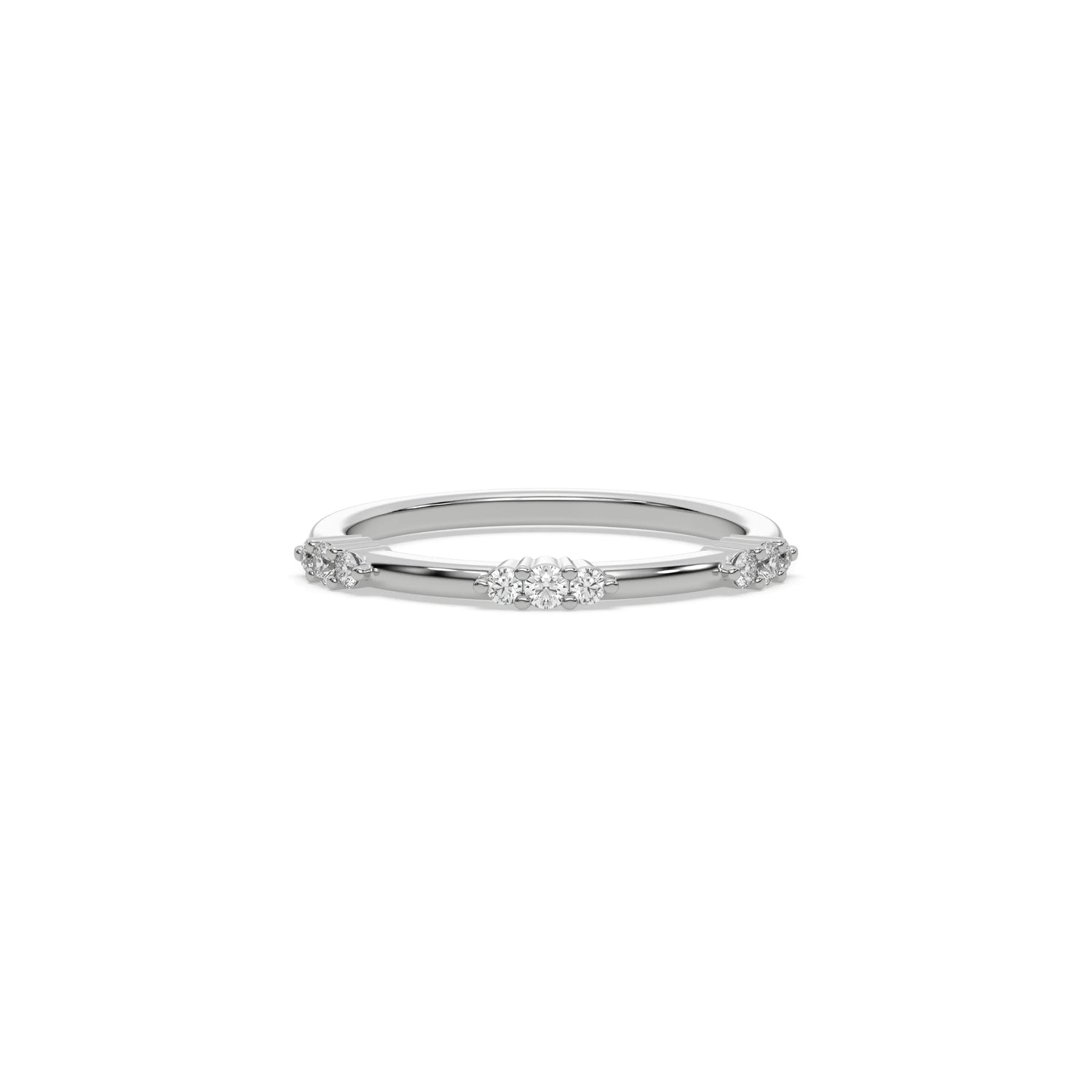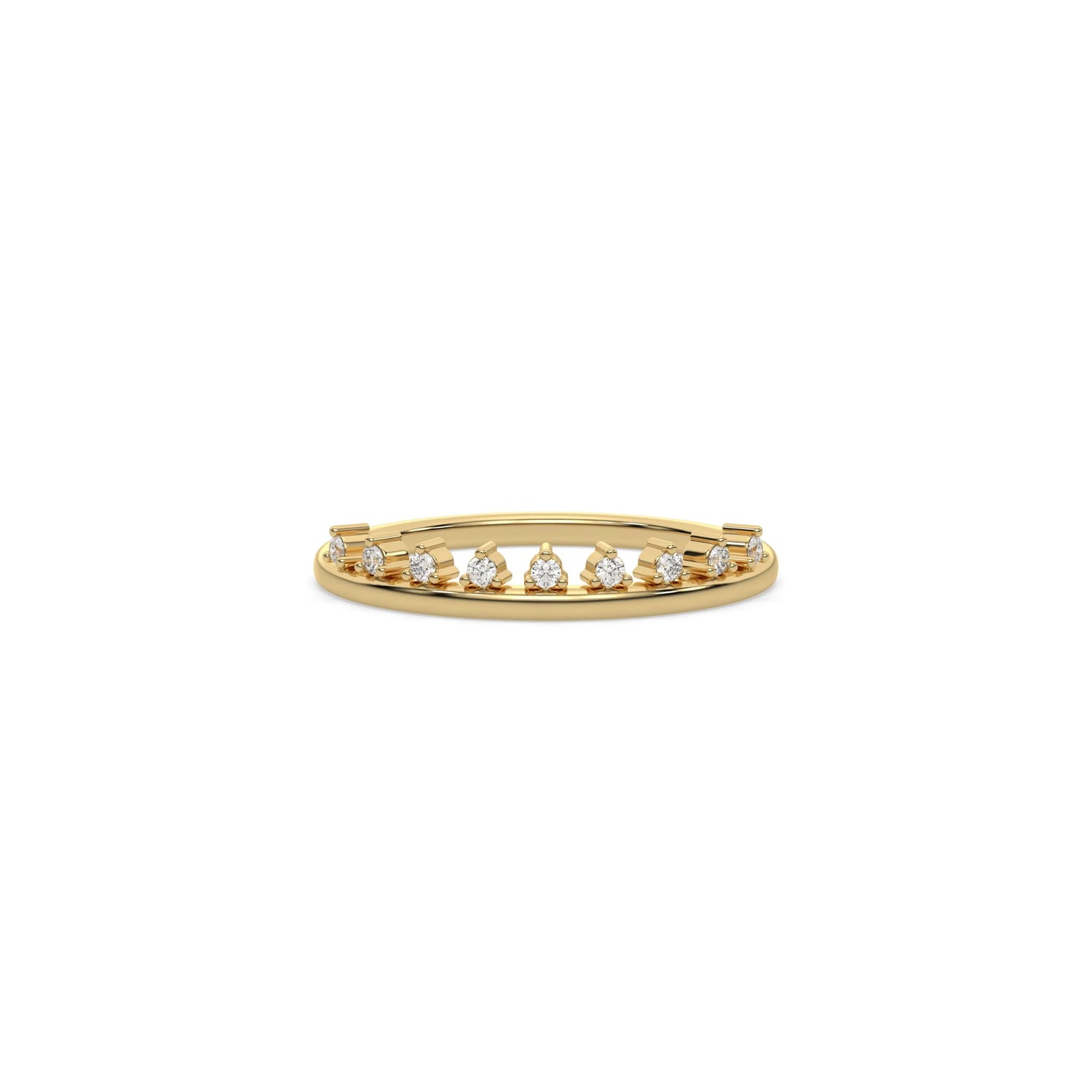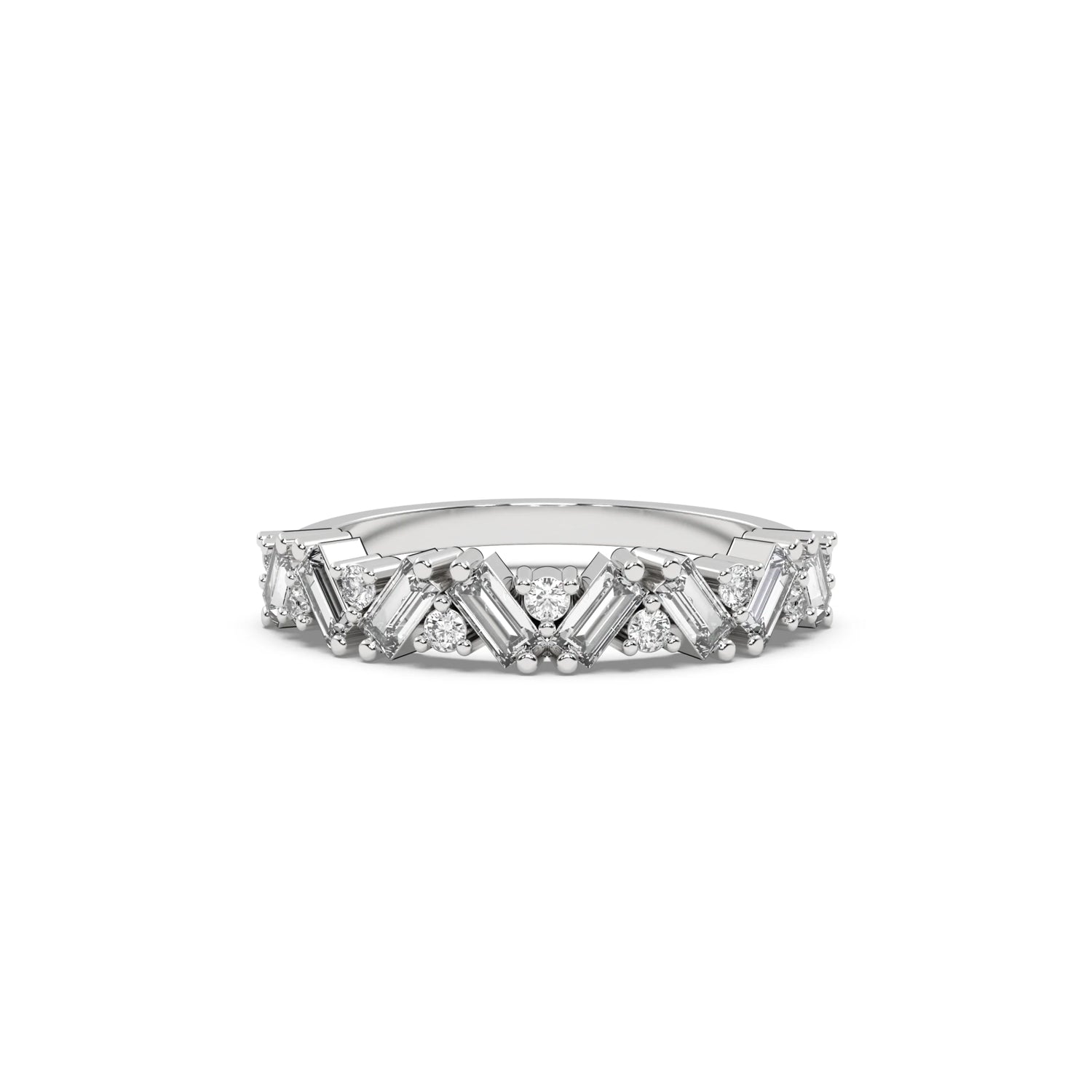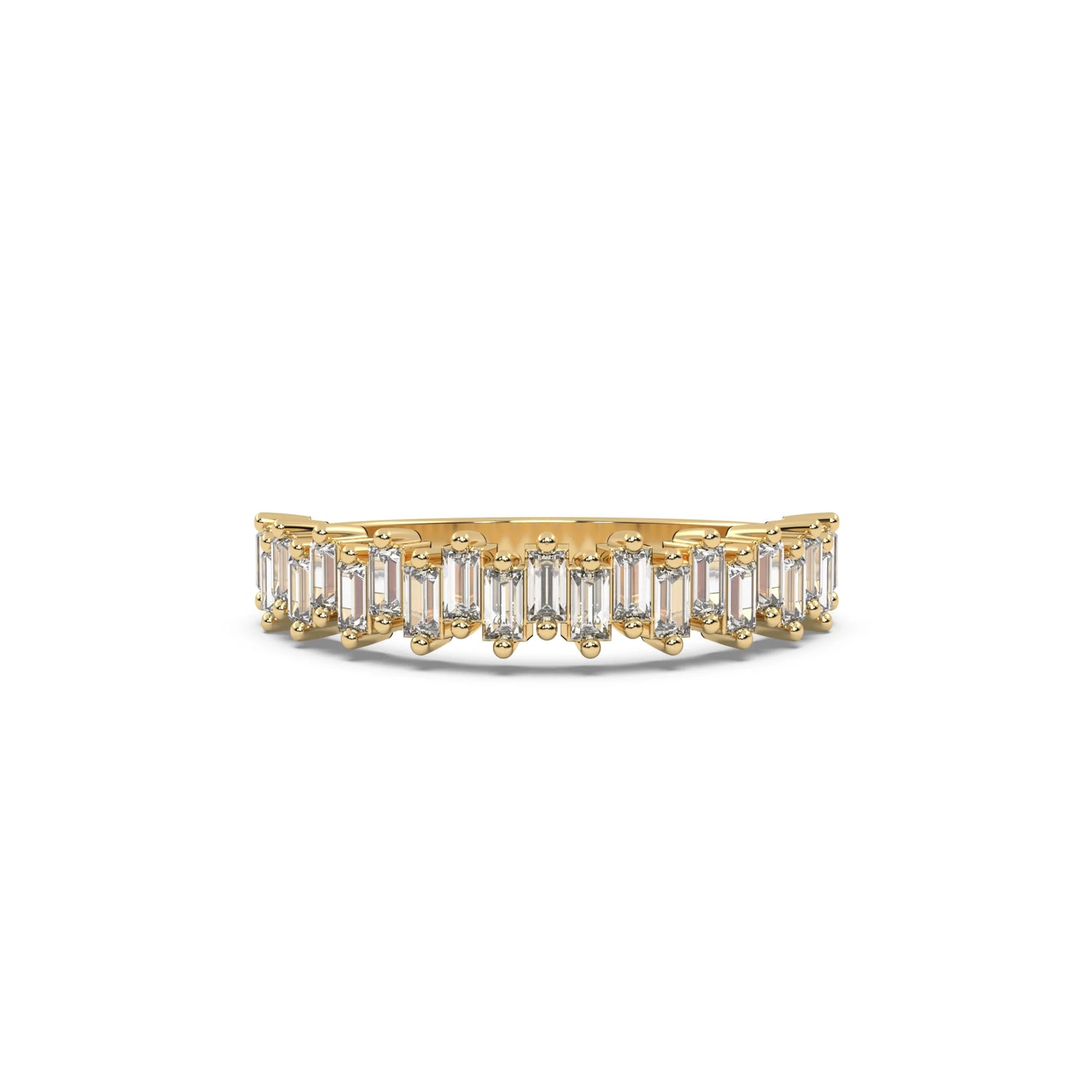
Diamond Wedding Bands for Women
You will wear a wedding band every day, so comfort matters as much as looks. This collection covers diamond bands in a range of shapes and settings, from a slim row of small stones to a full eternity band, with natural and lab-grown diamonds set in 10K, 14K or 18K gold. If you want to see every style first, start with our women's wedding bands, or look at anniversary rings for women if you are shopping for a milestone.
How Diamond Wedding Bands Are Made
Most diamond bands fall into three groups, and the group decides how the ring looks and how it wears.
Half eternity. Diamonds cover the top half of the band, and the lower half is plain metal. It is the more comfortable choice for daily wear and easier to resize. See half eternity rings.
Full eternity. Diamonds go all the way around. It shines from every angle and cannot easily be resized, so confirm your size first. See eternity bands.
Partial or shaped bands. Curved, contoured or chevron bands follow the outline of an engagement ring. See curved wedding bands and ring enhancers.
The stones can be held in different ways. In a shared-prong setting, small prongs hold two neighboring diamonds. A channel setting holds them between two metal walls. A bezel wraps each stone in a thin rim of metal. Prongs show the most diamond, and channel and bezel settings sit lower and snag less.
Diamond Wedding Bands by Shape
The shape of the diamonds changes the look of the band along the finger.
Round
The most common choice. Small round diamonds in a row give an even line of sparkle and sit well beside almost any engagement ring. See round diamond wedding bands.
Oval
Oval stones are longer than they are wide, so a band of ovals reads as a softer, more flowing line. See oval diamond wedding bands.
Princess
Square princess stones sit side by side in a channel for a sharp, continuous line of light. See princess cut wedding bands.
Pear
Pear stones set in a row or as a single shaped band give a distinctive profile. They suit a pear engagement ring in particular. See pear shape diamond wedding bands.
Marquise
A pointed oval that can make a finger look longer. Marquise stones are often set in a V or chevron shape. See marquise diamond wedding bands.
Emerald
Long, rectangular emerald-cut stones form a clean, step-faceted line with more flash than sparkle. See emerald cut diamond wedding bands.
Baguette
Narrow, straight-sided stones set end to end give a sleek, modern look that stacks neatly. See baguette diamond wedding bands.
Heart
A less common choice for a band with a romantic detail. See heart shape diamond wedding bands.
Natural or Lab-Grown Diamonds
Natural diamonds are mined, and many buyers prefer them for their origin. See our natural diamond wedding bands.
Lab-grown diamonds have the same chemical makeup and look as natural ones and usually cost less per carat, so the same budget often buys a fuller band. See our lab-grown diamond wedding bands, or read our lab vs natural diamond guide.
Choosing the Metal
Our diamond bands are made in solid 10K, 14K or 18K gold, in yellow, white or rose.
Yellow gold has a warm, traditional look. White gold looks bright and clean next to diamonds. It is rhodium plated, so it may need replating after some years. Rose gold has a soft pink tone and is a little tougher because of its copper content. If you wear your band with an engagement ring, match the metal so the two rings wear evenly.
Higher karat means more gold and richer color. Lower karat is harder and costs less. See our 14K vs 18K gold guide.
Pairing a Band With Your Engagement Ring
The shape and height of your engagement ring decide which band fits best.
Our guides on how to choose a wedding band for an engagement ring, curved vs straight bands and how to stack a wedding band with an engagement ring cover this in more detail.
How to Choose Your Band
- Style. Half eternity for daily comfort, full eternity for all-round shine, or a shaped band to fit your engagement ring.
- Setting. Prongs show the most diamond. Channel and bezel sit lower and snag less.
- Diamond shape and size. Smaller stones read as delicate. Larger stones read as a statement.
- Metal. Match your engagement ring.
- Ring size. Use our size guide, and read our returns and exchange policy before ordering.
For looking after your band afterward, our care guide covers cleaning and checking the stones. If you want something made to your own design, you can ask about a custom design.
Find Your Band at Diagaa
If you know the shape you want, go straight to it from the list above. If you are still deciding, begin with our guide to how to choose a wedding band for a woman, then browse the full range of women's wedding bands. To learn more about us, see our About page.