Round Cut Engagement Rings for Women
The round brilliant is the diamond most people picture when they imagine a proposal, and it suits every way of setting a stone. Our round engagement rings come in seven settings, from a bare solitaire to a full halo on a pavé band, each with a natural, lab-grown or colored center. Choosing a round ring comes down to how much metal and how many small diamonds you want around that one bright circle.
The Shape That Fits Every Setting
A round has no corners to protect and no point to orient, so any setting suits it: four prongs or six, a halo, a bezel or stones hidden underneath. That freedom is why a round ring can look completely different from one design to the next while the center stays the same. It's also why round centers are the easiest to reset later, if you ever want to move the diamond into a new design.
Its sparkle is measured, too. Round brilliants are the one shape for which grading labs issue a full cut grade, so you can compare how well two stones handle light rather than guessing from photos. A center graded Excellent or Very Good will look brighter and livelier than a heavier stone cut poorly. On the hand, a round also flatters almost every finger. A small round suits a slim finger without overwhelming it, while a larger one sits comfortably on a wider hand, and its circle softens a long or angular hand in a way straight-sided shapes don't. If you're unsure of the size to choose, a round is the most forgiving starting point. Our diamond cut grade guide explains the scale.
Seven Ways to Set a Round
Think of the seven settings as a scale, from the least metal and fewest stones to the most.
The solitaire holds the center alone on a plain band. Nothing competes with it, and every wedding band will sit beside it.
The solitaire with a pavé band keeps the center on its own but lines the band with small diamonds, so light runs along the finger toward the stone.
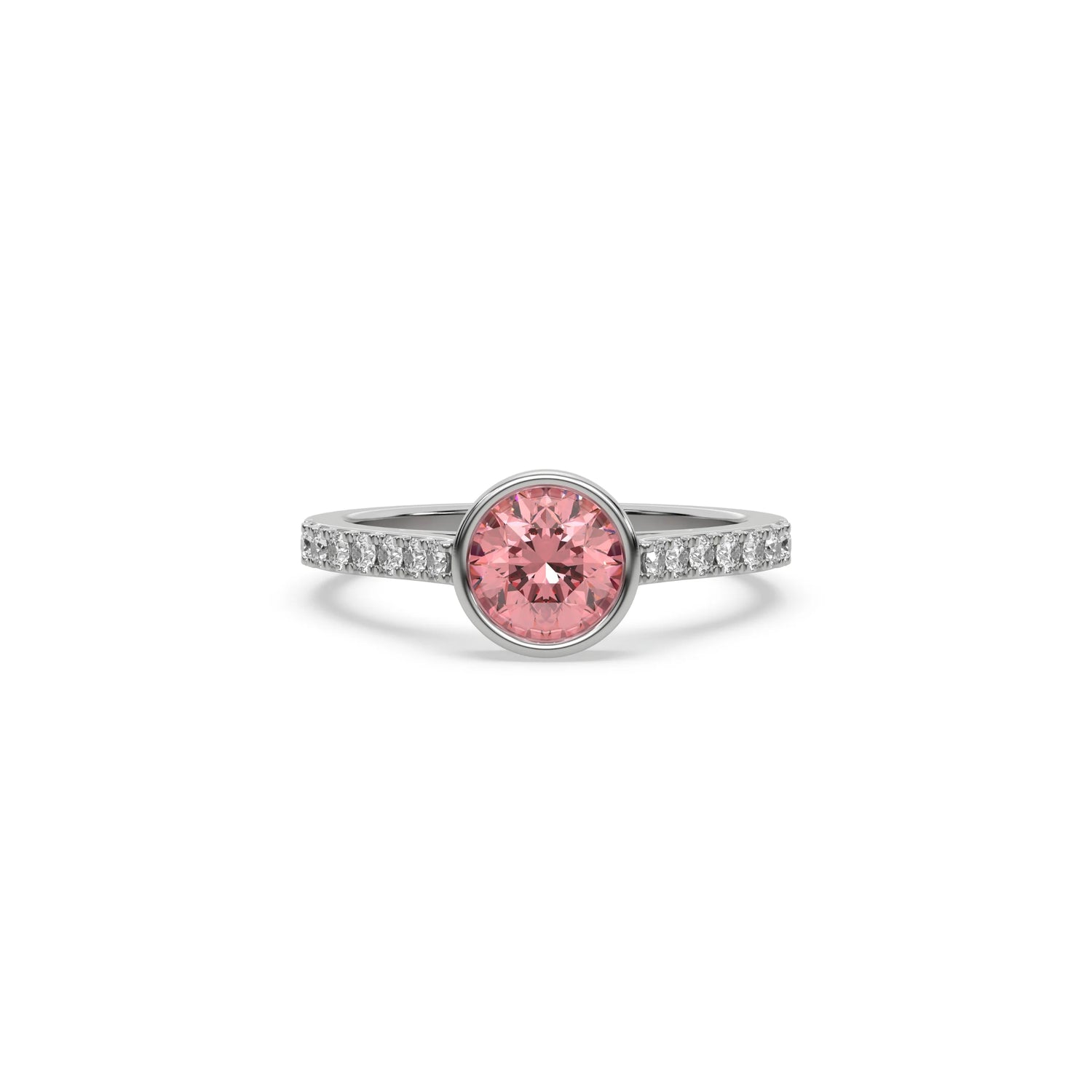
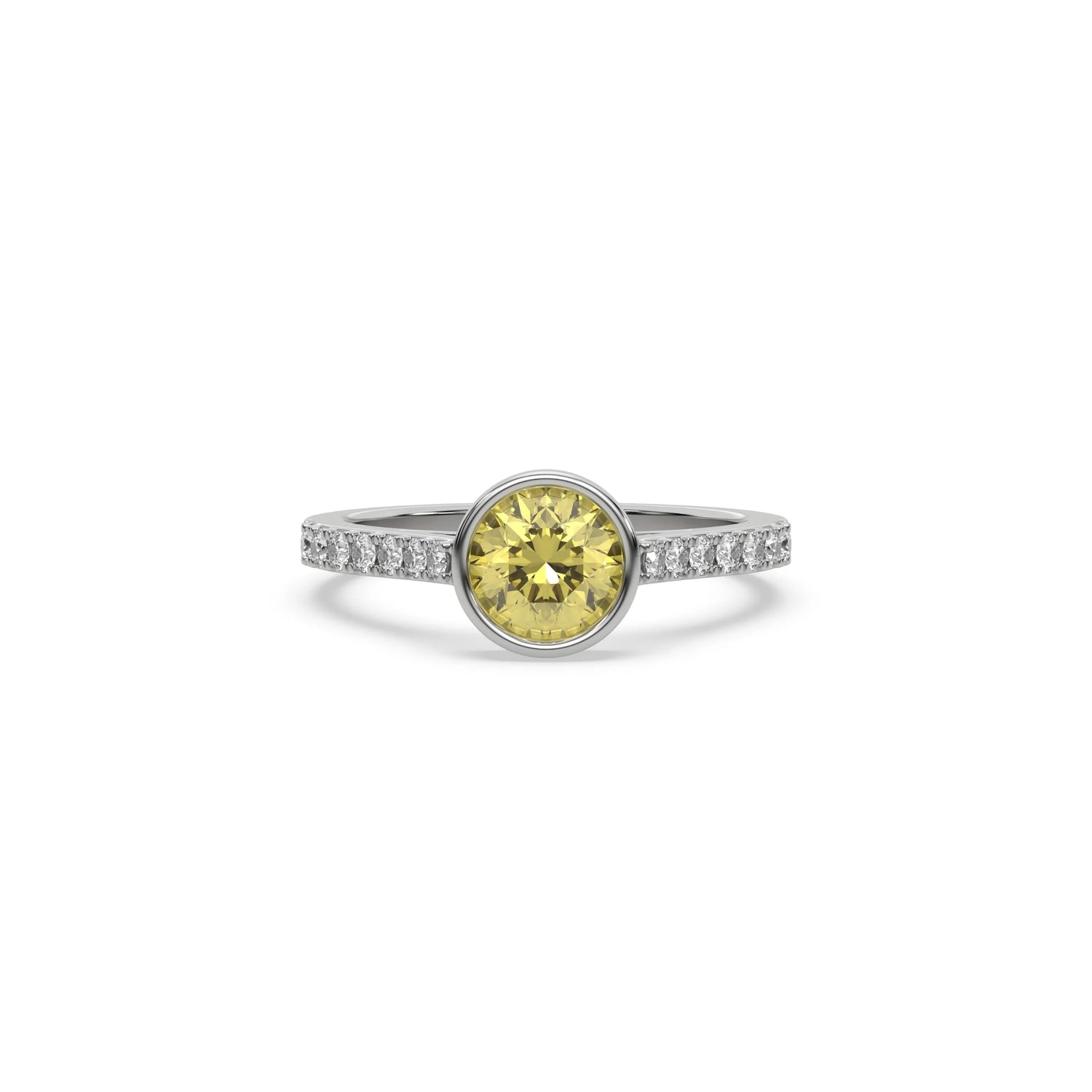
The bezel wraps the center in a smooth rim of gold. It's the most protective setting and the most modern-looking, with no prongs to snag a sweater.
The bezel with a pavé band pairs that protective rim with a diamond-lined band for more sparkle around the hand.
The hidden halo places a ring of small diamonds under the center, visible from the side but not from above, so the stone keeps a clean solitaire look face-up. Our hidden halo engagement rings cover the style across shapes.
The classic halo circles the center with small diamonds on top, making it look noticeably larger. A halo is the most efficient way to add visible size without moving up in carat weight.
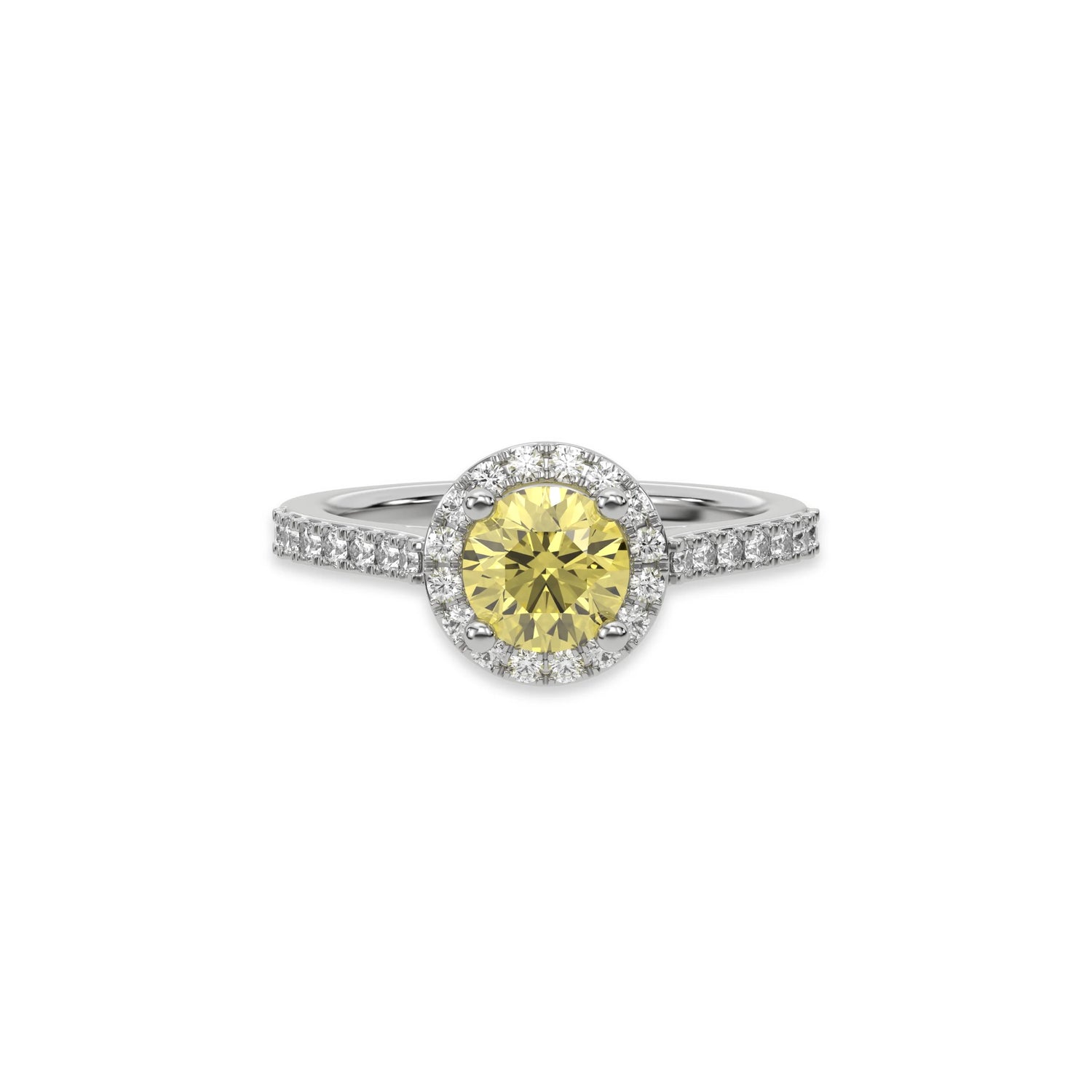
The halo with a pavé band is the fullest design of all, with diamonds around the center and down the band. Every halo style is collected in our halo engagement rings.
Natural, Lab-Grown or Colored
Each setting can hold one of three kinds of center.
A natural round is mined, and ours are offered at 1 carat, with larger natural stones sourced on request. Natural diamonds of half a carat and above come with an IGI or GIA report, and for a round, that report includes the cut grade. See every mined option in our natural diamond engagement rings.
A lab-grown round is grown by the CVD method and is a real diamond in every physical and chemical respect. Lab-grown centers go up to 3 carats, with larger stones on request, and those of 1 carat and above come with an IGI report. For a round over 1 carat, lab-grown is the route here. Our guide to natural versus lab-grown diamonds for engagement rings explains the trade-offs.
A colored round sets a pink, yellow, blue or green diamond in the center, and all seven settings are offered in each color. These are lab-grown diamonds whose color is created by treatment after growth, and each listing says so, though some older product names leave out the word "lab". Colored centers also go up to 3 carats, with larger on request. All four shades are in our colored lab diamond engagement rings.
Any ring priced over $800 also includes a GSI jewelry certificate. Settings are made in 10K, 14K or 18K yellow, white or rose gold, or 925 sterling silver.
Planning the Wedding Band
A round engagement ring is usually worn with a band, and the setting decides which bands sit closest. A solitaire, a bezel or a hidden halo leaves room for almost any straight band to sit flush. A classic halo or a halo with a pavé band can push a straight band away slightly, so some brides choose a curved or notched band, or simply accept a small gap. A row of small rounds in the band echoes the center and makes the two rings look like a set; our round diamond wedding bands are made for this. Matching the metal of the two rings keeps the pair cohesive, while a contrast, such as a yellow gold band beside a white gold ring, looks relaxed and collected over time.
Rounds Made to Your Design
If none of the seven settings is quite right, we can build one. Common requests include a natural round above 1 carat, a lab-grown round above 3 carats, a six-prong solitaire, a cathedral setting that lifts the center higher, a vintage-style round with milgrain edges, or an Old European cut with its softer, antique sparkle. Share what you have in mind with our custom design team. Shipping on US orders is free, and we send rings abroad as well.